Time Frame for Postpartum Depression: What to Expect in the First Year
The time frame for postpartum depression is not the same for every parent. Some people notice mood changes within days, some feel worse several weeks later, and others first recognize symptoms many months into the first year. That uneven timing can make a new parent wonder whether what they feel is "too late" to matter or "too early" to name. It is not. Postpartum mental health can shift as sleep, hormones, feeding, support, identity, and daily stress change. If you want a private way to reflect on symptoms before a conversation with a clinician, an educational EPDS screening tool can help you organize what you are noticing.
This article is for information only. It cannot replace a personal medical assessment, and urgent thoughts of self-harm or harming a baby need immediate local emergency support.
The Short Answer: PPD Can Appear Any Time in the First Year
Postpartum depression is often discussed as if it begins right after birth, but the real time frame is wider. Many clinical and public health resources focus on the first weeks and months because that is when postpartum checkups often happen. Still, symptoms can begin later in the first year, and some people who seem emotionally steady at two or three months may struggle at nine or ten months.
A helpful way to think about timing is this:
- Baby blues usually begin in the first few days and tend to ease within about two weeks.
- Postpartum depression symptoms may begin in the early weeks, but they can also appear later.
- Symptoms that last beyond two weeks, feel intense, interrupt daily life, or include frightening thoughts deserve support.
- Recovery can be gradual, with better days and harder days mixed together.
The important point is not finding the perfect label on your own. The important point is noticing patterns early enough to talk with someone who can help.
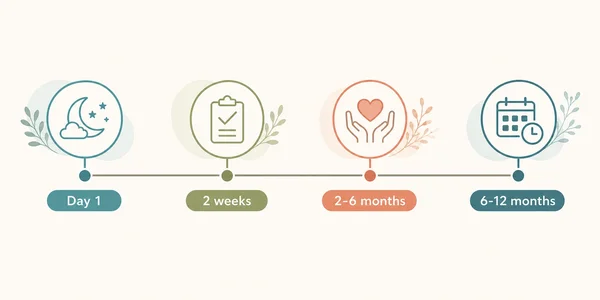
A Practical Postpartum Depression Timeline
The first year after birth includes several emotional transition points. A timeline can make the pattern easier to understand, but it should not be treated as a rulebook.

Days 1 to 14: Baby blues are common, but intensity matters
In the first two weeks, many new mothers experience crying spells, mood swings, anxiety, irritability, and trouble sleeping even when the baby sleeps. These changes are often connected with the physical intensity of birth, major hormone shifts, pain, feeding pressure, and sleep loss.
Baby blues tend to come and go. A parent may cry in the afternoon, laugh later, and still feel some emotional range. If sadness, panic, numbness, or hopelessness feels constant, severe, or frightening, it is worth reaching out earlier rather than waiting for the two-week mark.
Weeks 2 to 6: Symptoms that continue need attention
After the first couple of weeks, persistent symptoms become more concerning. This is often when a parent realizes that the low mood is not simply a difficult day. Signs may include feeling detached from the baby, losing interest in things that usually matter, feeling worthless, sleeping too little or too much, appetite changes, or feeling unable to cope.
This stage overlaps with common postpartum visits, which makes it a natural time to bring up mood symptoms. It can help to write down what has changed, how long it has been happening, and whether symptoms affect feeding, sleep, bonding, safety, or basic routines.
Months 2 to 6: The pressure can become more visible
For some parents, the early survival phase hides the emotional strain. Around months two to six, outside support may fade, a partner may return to work, visitors may stop checking in, and expectations may rise. If the baby has reflux, feeding difficulties, sleep disruption, or medical needs, exhaustion can deepen.
This is also a useful window for structured reflection. A private online EPDS self-check can help a parent or supportive partner put mood, anxiety, guilt, and enjoyment into a clearer pattern. A score is not the whole story, but it can make a conversation with a doctor, midwife, therapist, or health visitor easier to begin.
Months 6 to 12: Later symptoms still count
Postpartum depression is not limited to the first six weeks. Later symptoms can be missed because the outside world may assume the parent is "back to normal." In reality, the second half of the first year can bring new pressures: returning to work, weaning, relationship strain, financial stress, isolation, sleep regression, or the emotional weight of doing the same hard routine for months.
Late-onset symptoms still deserve care. Feeling worse at nine months postpartum does not mean you failed to adjust. It may mean that the balance of demands and support has changed, or that earlier symptoms never fully lifted.
How Long Does Postpartum Depression Last?
There is no single duration. Some people improve within weeks after support begins. Others need several months of steady care, practical help, and follow-up. A smaller group has symptoms that continue longer, especially when depression began during pregnancy, there is a history of depression or anxiety, sleep remains severely disrupted, or support is limited.
The time frame can also depend on whether the person receives help. Untreated symptoms may stretch on because the same stressors keep repeating: poor sleep, isolation, shame, overwork, and lack of emotional backup. Support does not have to be dramatic to matter. Regular check-ins, protected rest, therapy, medical care when appropriate, partner involvement, and reduced load can all make recovery more possible.
Improvement is often uneven. A parent may have three calmer days, then a very hard night and feel back at the beginning. That does not erase progress. A better measure is whether the overall pattern is slowly becoming safer, steadier, and more connected.
What Makes the Time Frame Different From Person to Person?
Several factors can shift when postpartum depression appears and how long it lasts. These factors do not mean a parent caused the symptoms. They simply help explain why one person's timeline may look different from another's.
Common influences include:
- Depression or anxiety before pregnancy or during pregnancy
- A difficult birth, NICU stay, pregnancy loss history, or traumatic medical experience
- Pain, thyroid problems, anemia, feeding difficulties, or other physical recovery issues
- Severe sleep disruption and lack of protected rest
- Limited partner, family, community, or financial support
- Relationship stress, single parenting pressure, or domestic safety concerns
- Returning to work before the parent feels ready
- A baby with high medical, feeding, or sleep needs
The emotional meaning of birth also matters. Some parents grieve the birth experience they hoped for. Some feel guilt because they expected instant joy. Some feel trapped by the constant responsibility. These reactions can be painful, but they are also human.
When Does Postpartum Get Better Mentally?
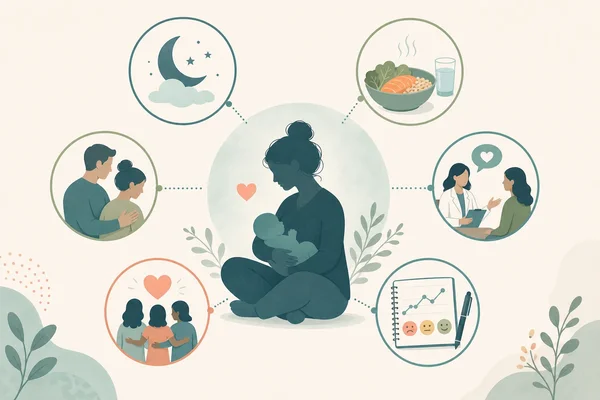
Many parents feel gradual improvement as sleep becomes more predictable, feeding settles, the body heals, and routines become less unfamiliar. For baby blues, that improvement often happens within the first two weeks. For postpartum depression, the improvement usually depends on support, symptom severity, health history, and how quickly the parent is connected with care.
Mentally "better" may not mean feeling like the old version of yourself overnight. It may begin with smaller signs:
- You have moments of interest, tenderness, or relief again.
- You can tell someone honestly what the day feels like.
- You can rest without feeling constant guilt.
- You have fewer frightening thoughts, or they feel less sticky.
- You can imagine a next step, even a small one.
If none of these signs are appearing, or symptoms are getting heavier, it is a good reason to ask for help. You do not need to wait until everything is unbearable.
What to Do if the Timeline Feels Worrying
If your symptoms last longer than two weeks, return after seeming to improve, or begin later in the first year, consider a simple three-part response: notice, share, and support.
First, notice the pattern. Write down when symptoms began, what time of day is hardest, what helps even slightly, and whether there are safety concerns. Include anxiety, intrusive thoughts, numbness, anger, and loss of interest, not only sadness.
Second, share the pattern with a professional or a trusted support person. You might say, "I have not felt like myself for several weeks, and I am worried about how long this is lasting." If speaking feels too hard, showing notes or a screening result can help.
Third, support the basics while you wait for care. Ask someone to cover one sleep block, bring food, sit with the baby while you shower, reduce visitors, or help with appointments. Small practical help is not a substitute for professional care, but it can lower the load enough to make the next step possible.
A Gentle Way to Track Mood Across the First Year
Because postpartum depression can appear at different points, one check-in is rarely enough. A gentle rhythm of reflection can help: once in the early weeks, again around the postpartum visit, again when routines change, and again if symptoms return. The goal is not to monitor yourself harshly. The goal is to notice meaningful changes before they become lonely.
You can use a journal, a notes app, a conversation with a partner, or a screening questionnaire. If you prefer a structured place to begin, a private postpartum mood check can give you language for symptoms that may otherwise feel vague or embarrassing. Use the result as a conversation starter, not as a final answer.
If you are supporting a new parent, the best question is often not "Are you depressed?" Try, "Which part of the day feels hardest right now?" or "What can I take off your plate today?" Timing matters, but compassionate attention matters too.

FAQ
What is the time frame for postpartum depression?
Postpartum depression can begin in the first weeks after birth, but it can also appear later in the first year. Baby blues usually begin within a few days and ease within about two weeks. Symptoms that continue beyond that, become intense, or interfere with daily life deserve professional support.
Can postpartum depression start months after birth?
Yes. Some parents first notice symptoms several months postpartum, especially when sleep disruption, work changes, isolation, feeding stress, or reduced support becomes more intense. Later symptoms still count and are worth discussing with a clinician.
When does postpartum get better mentally?
Some emotional changes ease within two weeks, especially baby blues. Postpartum depression often improves more gradually and usually depends on support, rest, therapy, medical care when appropriate, and follow-up. If things are not improving or are getting worse, reaching out is a reasonable next step.
What is the 3-3-3 rule for postpartum?
There is no universal medical 3-3-3 rule for postpartum depression. Some people use "3-3-3" to describe grounding exercises, such as naming things you see, hear, and feel. Grounding may help during anxious moments, but it should not replace professional support when symptoms are persistent, severe, or unsafe.
How can postpartum depression be addressed safely?
A safe first step is to tell a healthcare professional what has changed, how long it has been happening, and whether there are any urgent safety concerns. Support may include therapy, medical care, practical help, sleep protection, partner involvement, and follow-up. The right plan should be personal and guided by a qualified professional.
What are the 4 stages of PPD?
There is not one official four-stage model that applies to everyone. A practical way to understand the experience is early emotional changes, emerging symptoms, persistent or worsening symptoms, and recovery with ongoing support. Real life may move back and forth between these phases.
Is it too late to ask for help at 9 or 10 months postpartum?
No. Mood symptoms at 9 or 10 months postpartum can still be part of the postpartum mental health picture. Asking for help later in the first year is valid, especially if symptoms are new, returning, or affecting daily life.