Postpartum Depression Screening Tools: How to Choose and Use Them
Postpartum depression screening tools are short, structured questionnaires that help surface emotional health concerns during pregnancy and after birth. They are not a label, a verdict, or a substitute for a clinician's full evaluation. Their real value is quieter and more practical: they give you language for what has been hard to explain, and they can help a care team decide what kind of support should come next.
For parents who want a private first step, a confidential EPDS self-check can make the process feel less intimidating. This guide explains the most common tools, how clinicians often use them, and how to think about results with care rather than fear.

What Counts as a Postpartum Depression Screening Tool?
A screening tool is a standardized set of questions designed to flag possible emotional distress, mood changes, anxiety, or thoughts that deserve follow-up. The word "screening" matters. A screening result can show risk or concern, but it cannot replace a conversation with a qualified health professional.
Good screening tools usually have four qualities:
- They use the same questions for everyone, so results are more consistent.
- They have been studied in real clinical or community settings.
- They include a clear scoring method.
- They are paired with next steps, especially when a score or answer suggests safety concerns.
In postpartum care, the best-known tools focus on symptoms that can appear after birth, such as persistent sadness, loss of pleasure, anxiety, guilt, overwhelm, sleep disruption beyond normal newborn care, or feeling unable to cope. Some tools are broad depression screeners used in many adult settings. Others were built specifically for the perinatal period, which includes pregnancy and the first year after birth.
Common Screening Tools for Postpartum Depression
Different settings may use different questionnaires. A hospital, midwife practice, pediatric office, community program, or online support resource may choose a tool based on workflow, language availability, scoring needs, and how follow-up support is handled.
Edinburgh Postnatal Depression Scale
The Edinburgh Postnatal Depression Scale, often shortened to EPDS, is one of the most widely used postpartum and perinatal screening tools. It has 10 questions and was designed for the weeks and months around birth. It asks about mood, enjoyment, anxiety, guilt, coping, sleep-related distress, sadness, crying, and self-harm thoughts.
EPDS is popular because it is brief, focused on the postpartum context, and widely translated. Many parents also find it easier to complete than a long clinical form. If you want to see how the structure feels before talking with a provider, an online EPDS screening tool can help you organize your thoughts in a private setting.
PHQ-9
The PHQ-9 is a nine-question depression screener used broadly in primary care and mental health settings. It is not specific to postpartum life, but it is familiar to many clinicians and includes symptom areas such as interest, mood, sleep, energy, appetite, concentration, movement changes, self-worth, and self-harm thoughts.
Because the PHQ-9 is common across adult care, it can be useful when postpartum depression is being considered alongside other health concerns. The tradeoff is that some postpartum experiences, such as disrupted sleep and fatigue, may need careful context so ordinary newborn care is not confused with emotional health risk.
PHQ-2 and Ultra-Brief Screeners
The PHQ-2 uses two opening questions about low mood and loss of interest. Some programs also use very short three-question approaches to decide whether a fuller screening conversation is needed. These tools can be helpful when time is limited, but they are usually a doorway, not the whole process.
If a brief screener suggests concern, the next step is often a fuller questionnaire such as the EPDS or PHQ-9, followed by a conversation about symptoms, safety, support at home, and care options.
Anxiety and Perinatal-Specific Add-ons
Postpartum distress does not always look like sadness. Anxiety, intrusive worries, panic-like feelings, irritability, and intense guilt can also be part of the picture. Some care teams use anxiety screeners, trauma-informed questions, or perinatal mental health checklists alongside depression tools.
This is one reason a single score should be interpreted carefully. A parent may score below a typical threshold and still need support. Another parent may score high during a uniquely difficult week and need a calm follow-up conversation to understand what is happening.
How to Choose the Right Tool for the Moment
There is no single perfect tool for every parent, every clinic, or every stage after birth. The best choice depends on the question being asked.
If the goal is postpartum-specific reflection, the EPDS is often a strong fit because it was created for the perinatal period. If the goal is continuity with primary care or mental health records, the PHQ-9 may be preferred. If the goal is a quick first check in a busy setting, a short screener may help identify who needs more time and attention.
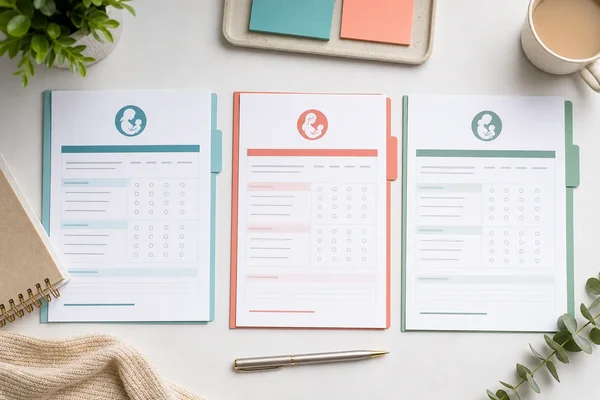
Here is a practical way to compare them:
| Tool | Typical Strength | Best Use |
|---|---|---|
| EPDS | Perinatal focus and 10-question format | Pregnancy and postpartum mood screening |
| PHQ-9 | Familiar across adult healthcare | Broader depression screening and follow-up |
| PHQ-2 | Very brief opening check | Fast triage before a fuller tool |
| Anxiety add-ons | Captures worry and panic symptoms | When anxiety is a major concern |
When choosing a tool, look for these practical safeguards:
- The questionnaire is validated and scored consistently.
- The language is easy for the parent to understand.
- The setting has a plan for elevated scores or safety concerns.
- The parent knows the result is a starting point for support, not a personal failure.
- Cultural context, language, family support, and access to care are considered.
What Guideline-Aligned Screening Looks Like
Current professional guidance in the United States emphasizes routine mental health screening during pregnancy and after birth, using standardized and validated tools. In practice, that means screening should not depend only on whether a parent looks visibly distressed or asks for help first.
A guideline-aligned process usually includes:
- Screening at more than one point in the perinatal timeline, such as early prenatal care, later pregnancy, and postpartum visits.
- Use of a validated instrument, commonly EPDS, PHQ-9, or another tool chosen by the care setting.
- A defined response plan when results are elevated.
- Immediate attention to any self-harm item or safety concern.
- Follow-up support, referral, or treatment access when needed.
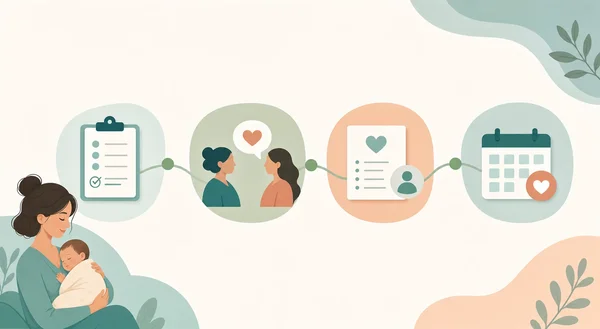
This last point is essential. Screening without follow-up can leave a parent feeling exposed and unsupported. The stronger model is screening plus a warm handoff: a nurse, doctor, midwife, therapist, social worker, or support program explains what the result may mean and what choices are available.
How to Read Results Without Panic
It is normal to feel nervous about a screening score. Many parents already feel judged, exhausted, or unsure whether their emotions are "bad enough" to mention. A score can feel personal, but it is better understood as information.
Try reading results through three questions:
- What symptoms did I endorse most strongly?
- How long have these feelings been affecting daily life?
- What kind of support would make the next few days safer or more manageable?
The answers may point toward practical next steps: bringing the score to a postpartum appointment, asking a partner to help with nighttime coverage, contacting a therapist, discussing medication questions with a clinician, or calling urgent support if safety feels uncertain.
For any self-harm thought, feeling unable to stay safe, or fear that you may harm yourself or someone else, seek immediate local emergency help or contact a crisis service in your area. Screening tools can support awareness, but urgent safety needs deserve direct human help right away.
A Gentle Next Step With Screening Tools
The most useful postpartum depression screening tools do not end with a number. They help start a clearer conversation: with yourself, with someone who cares about you, and with a professional who can look at the full picture.
If you are comparing tools, EPDS is often the most postpartum-specific option, while PHQ-9 is one of the most common broad depression screeners. A short tool can be useful for a quick first check, but a fuller questionnaire and a supportive follow-up plan give more context.
When you are ready, you can use a gentle EPDS self-reflection tool to organize what you have been feeling. Bring the result, your symptoms, and your questions to a clinician or trusted support person. You do not have to turn a confusing season into a neat explanation before asking for help.

FAQ
What tool is recommended for screening postpartum depression?
The EPDS is one of the most commonly recommended tools for postpartum and perinatal depression screening because it was designed for this life stage and is brief enough for routine use. Some clinicians use the PHQ-9 instead, especially in primary care settings. The better question is whether the tool is validated, scored consistently, and connected to follow-up support.
What is the most commonly used depression screening tool?
Across general adult healthcare, the PHQ-9 is one of the most widely used depression screeners. In postpartum and perinatal care, the EPDS is especially common because it focuses on experiences around pregnancy and birth. Many systems use both types of tools in different settings.
What are the ACOG guidelines for postpartum depression screening?
ACOG guidance supports screening patients for depression and anxiety during prenatal and postpartum care with standardized, validated instruments. It also emphasizes that screening should connect to timely assessment, care, referral, and follow-up when results suggest concern.
What is the screening tool for postnatal depression?
"Postnatal" and "postpartum" are often used in similar ways. The EPDS is the best-known postnatal depression screening tool, while the PHQ-9 is another common option. The choice may depend on the care setting, language needs, timing, and follow-up process.
Can an online screening tool replace a clinician?
No. An online screening tool can help you reflect, notice patterns, and prepare for a conversation, but it cannot replace a trained professional's full evaluation. If symptoms feel intense, persistent, unsafe, or hard to manage, it is worth contacting a healthcare or mental health professional.
How often should postpartum depression screening happen?
Many guidelines and quality programs encourage screening more than once across pregnancy and the postpartum period, because symptoms can change over time. A parent who felt well at one visit may need support later, especially after sleep disruption, feeding challenges, birth complications, or major life stress.