EPDS Screening: A Comprehensive Guide to Culturally Adapted Perinatal Depression Assessment
Maria, a new mother in Mexico City, struggled to express her feelings of sadness on the standard EPDS because Mexican culture often discourages discussing emotional vulnerability. Meanwhile, in Tokyo, Yuki's EPDS results initially indicated low risk, though she was experiencing significant anxiety—her cultural tendency to mask emotions affected her responses. These scenarios highlight a critical gap in global mental health: how effective is the Edinburgh Postnatal Depression Scale (EPDS) when faced with diverse cultural realities?
At Epds.me, our mission is to bridge this gap. By offering a scientifically validated EPDS screening tool across 16 languages—from Spanish to Arabic—we provide culturally nuanced assessments that recognize how a mother's background shapes her experience. This article explores the vital importance of cultural adaptation in perinatal depression screening and how our technology ensures every mother is truly seen and heard.
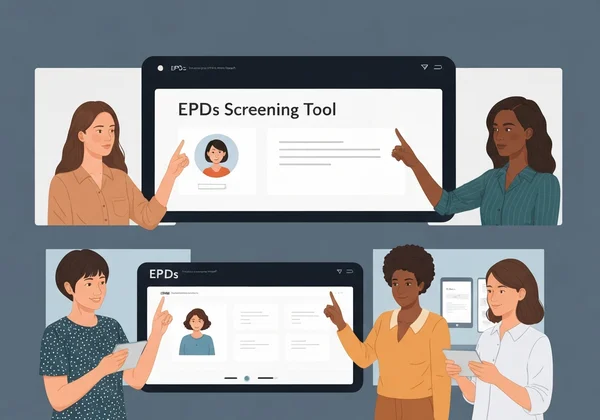
Why Cultural Sensitivity Transforms EPDS Outcomes
Understanding Risk Beyond Translation
Standardized screening tools often fail when they overlook cultural context—a critical flaw when emotional expression differs globally. A direct translation of the EPDS questionnaire is not enough. In Japan, cultural norms may lead to an under-reporting of sadness, potentially lowering scores despite real distress. Conversely, in some Latin American cultures, more open emotional expression might lead to higher scores that don't necessarily correlate with clinical depression. Research by Okano et al. (1996) confirmed that Japanese women under-report symptoms unless idiomatic adaptations are made, proving that context is everything.
Contrast These Real-Life Scenarios:
- A Nigerian mother, fearing community stigma, skips EPDS item 10 about self-harm, causing a physician to miss a critical risk factor.
- A Vietnamese user misunderstands the phrase “I have blamed myself unnecessarily” due to different grammatical and cultural concepts of guilt, leading to an inaccurate response.
Our AI-driven platform addresses these disparities by refining EPDS score interpretation through instruments validated by resident language professionals and mental health experts. Experience precise cultural adaptation with our screening tool.
Language Nuances: The Filipino vs. German Experience
Even between high-resource countries, translation is not neutrality. In Filipino, the phrase hindi makapagpasaya—literally “unable to make joyful”—carries a profound sense of social and familial responsibility, embedding a deeper layer of guilt than the direct German translation nicht glücklich (“not happy”). This subtle but powerful difference can significantly alter a mother's score and the resulting interpretation. Our team collaborates with maternal mental health anthropologists to identify these precision gaps, ensuring our screening tool captures the true emotional weight behind the words. Explore culturally sensitive screening options.
Multilingual EPDS: How Our Technology Navigates Meaning
Beyond Word-for-Word Design
Our epds calculator employs three adaptive layers to ensure accuracy and cultural relevance:
- Dialect Filters: The tool distinguishes between Mexican Spanish “agobiada” (overwhelmed by external pressures) and Argentine Spanish “angustiada” (a more internal sense of anguish).
- Localization for Symptom Expression: The Arabic questionnaire about sleep disturbance is adapted to account for culturally specific norms, such as the impact of Ramadan fasting on sleep patterns.
- AI Interpretation Guardrails: The system can flag anomalies. For instance, if Arabic-speaking women disproportionately avoid Question 5 (anxiety) during family screenings but score high on related items, it can trigger a contextual note for clinicians.
Case Study: Korean Screening Insights
A standard EPDS tool might categorize a moderate score of 14 as high-risk in a Western context. However, our localized data for Korea reveals important distinctions:
- Korean women often report elevated guilt (Item 7) due to intense societal pressures around motherhood, a factor that can be independent of depression severity. Our AI adjusts the interpretation framework to account for this cultural pattern.
- Based on these nuanced results, our platform can guide users toward community-based support, like traditional *S postpartum care centers or mothers' groups, rather than defaulting to clinical or pharmaceutical referrals.
Experience tailored results with our context-driven analysis.

The Complexities of Creating a Truly Global EPDS Tool
Beyond Translation: The Problem of Conceptual Equivalence
The greatest challenge isn't just translating words; it's ensuring that the underlying psychological concepts are equivalent across cultures. For example, the Western concept of "anhedonia" (the inability to feel pleasure) may not have a direct one-to-one equivalent in cultures where fulfillment is defined more communally than individually. Our development process involves extensive consultation with local psychologists and sociologists to re-frame questions that capture culturally relevant expressions of distress without losing clinical validity.
Avoiding Stereotypes While Embracing Nuance
Adapting a tool like the EPDS requires a delicate balance. The goal is to acknowledge cultural patterns without reinforcing harmful stereotypes. We use aggregated, anonymized data to identify trends, not to make assumptions about individuals. For example, while data might show a trend for stoicism in one culture, our tool never assumes a user from that background is hiding their feelings. Instead, it provides a safe, confidential space for honest self-reporting, ensuring the individual's experience is always the primary focus.
Empowering Global Communities: From Screening to Support
Healthcare Bias Mitigation
Epds.me partners with local healthcare providers, such as midwives in Nairobi and doulas in São Paulo, to co-develop interpretation guidelines that are practical and respectful. This grassroots collaboration ensures our tool is effective on the ground:
- In India, where clinic visits can be difficult, high EPDS postpartum depression scores can activate counselor referrals via WhatsApp, a more accessible and widely used platform.
- For refugee populations like the Rohingya, our system can integrate trauma-informed guidance, sometimes replacing text-based questions with visual or narrative-based prompts to reduce triggers.

Your Next Culturally Informed Step
- Secure & Confidential Screening: Complete the EPDS in your native language, knowing your data is private.
- Export Results Securely: Share an encrypted PDF of your results with a clinician, family member, or a diaspora-specialist therapist.
📣 Ready to feel understood? Start your free EPDS screening.
The Future: AI and the Evolution of Perinatal Mental Health Screening
The journey toward perfectly equitable mental health screening is ongoing. The next frontier lies in leveraging Artificial Intelligence and machine learning to create even more dynamic and responsive tools. Future iterations of the EPDS on platforms like ours may include:
- Real-Time Idiom Analysis: AI that can understand and interpret regional slang or colloquialisms related to mental distress.
- Predictive Pattern Recognition: Identifying subtle response patterns unique to specific cultural-linguistic groups that may indicate heightened risk, even with a low overall score.
- Personalized Resource Matching: Moving beyond language to match users with support resources that align with their specific cultural values and communication styles.
By embracing technology ethically, we can move closer to a world where every mother's mental health journey is supported with the dignity, respect, and precision she deserves.
Moving Forward
Real mental health support begins with understanding how cultural context shapes emotional expression. Perinatal mental health isn't universal—and your screening tool shouldn't be either. At Epds.me, we are committed to ensuring every mother, regardless of her background, receives a screening that respects her unique cultural experience while providing an accurate, scientifically rigorous risk assessment.
Global EPDS Clarification
Q: What if my cultural norms discourage talking about mental health? A: The EPDS at Epds.me is designed for private, confidential assessment that you can take anytime, anywhere. Results are for your eyes only and can offer discreet strategies, such as contacting confidential telehealth counselors who are fluent in your language. Start your confidential screening.
Q: Are there indigenous EPDS versions developed alongside communities? A: Yes, we collaborate directly with community leaders. For example, our work with the Navajo Nation helped produce versions that reflect indigenous concepts of wellness, such as hózhó (harmony and balance), providing a more relevant framework than standard Western models of depression. Explore our tailored resources.
Q: Does a high EPDS score automatically mean I have clinical depression? A: No. A score indicates risk, not a diagnosis. Many cultural factors, such as grieving rituals, immigration stress, or familial pressures, can influence results. Our AI-enhanced reports help clarify this context alongside recommending appropriate next steps with a healthcare professional. Get a nuanced interpretation of your results.
Q: Can my partner access the results if we speak different languages? A: Yes. Our shared report options include bilingual summaries. For example, a new mother can view her report in Hindi, while her partner can view a synchronized summary in German, fostering better communication and mutual understanding. Share a bilingual report.
🔗 Continue your journey to wellness: Discover multicultural maternal wellness tools on our homepage